
Everyday Life Expressions
Slang, phrasal verbs, and idioms real Americans use every day — the way people actually talk, not the way textbooks do.

55 Minutes, 6 Moments
Every phase builds toward one goal: real, spontaneous speaking.
Warm-Up
5 minInput
10 minControlled Practice
8 minBreakout Room
10 + 5 minFree Practice
10 + 5 minClosing
2 minWarm-Up
Activate the topic before any teaching happens.

"What's something that always happens to you, no matter what you do?"
Let students react freely — this naturally leads into the idea of "that's life."
Input — Today's 9 Chunks
Presented in real context, never as isolated words or grammar rules.
Idioms

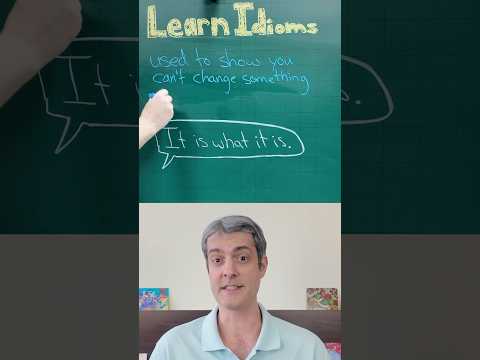
"It is what it is"

"You win some, you lose some"

"When it rains, it pours"

Phrasal Verbs

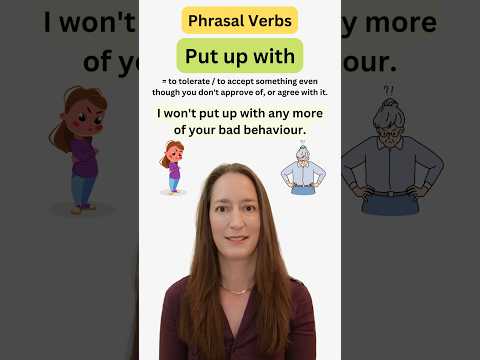
"put up with (something)"

"get through (a tough time)"


"shake it off"
Slang

"that's rough"


"no biggie"

"I'm beat"

Controlled Practice
Guided practice, gentle correction. Click to reveal each answer together as a group.
1. Your friend says: "I lost my job, but I found a better one two weeks later."
2. Your coworker is always 10 minutes late to meetings, but you need the job.
3. You worked all weekend and now you can barely keep your eyes open.
4. Complete the mini-dialogue: "My internet went down, then my phone died, then I got a flat tire." "Wow, ______!"
Breakout Room
Small groups of 2–3. Each group gets a real-life scenario and must naturally use at least 3 chunks from today.
Scenario A — Monday at Work
You're catching up with a coworker about a rough week: a project fell apart, a coworker is hard to deal with, and you're exhausted — but staying positive.
Scenario B — Catching Up With a Friend
You haven't talked in months. Share what's been going on — good and bad — and how you're handling it.
Your instructions:
- Get into your group of 2–3.
- Pick one scenario below.
- Talk for the full 10 minutes — no notes, no writing, just talking.
- Everyone in your group must use at least 2 chunks out loud during the conversation.
Feedback — 5 minutes
Back in the main room: tell the group one chunk you used and the situation you used it in.
Free Practice
Open conversation, minimal coach intervention. Let the students lead.
Feedback — 5 minutes
Share one thing that felt natural today and one chunk you still want to practice.
Closing
One chunk each student commits to using this week — in real life, not just in class.
Go around the room
Each student says one sentence: "This week, I'm going to use ___ when ___." No writing — just say it out loud.